 EN
EN
 DK
DK
Copenhagen Highlights Bike Guide for Cruise Visitors
Welcome to Copenhagen! You have just stepped off a massive cruise ship at Langeline or Oceankaj, joining an average of 20,000 other visitors during the peak summer months.
You have a window of just 5 to 6 hours to experience the Danish capital. It sounds stressful, but here's the secret: Copenhagen is one of the most bike-friendly cities in the world. It's flat, compact, and designed for two wheels. This carefully planned route includes Copenhagen’s most famous attractions as well as a few hidden gems that many visitors miss. Within just four hours, you will have the opportunity to visit three royal palaces — Rosenborg Palace, Christiansborg Palace, and Amalienborg, the official residence of the Danish king. Along the way, you will also see iconic landmarks such as the Little Mermaid, Nyhavn, and Freetown Christiania.
This guide is optimized for cycling, allowing you to see the most iconic sights without wasting time in taxi queues or waiting for the shuttle bus. If you prefer to walk, you can still follow along but you'll need to be selective about which stops you make to ensure you get back to the ship on time.

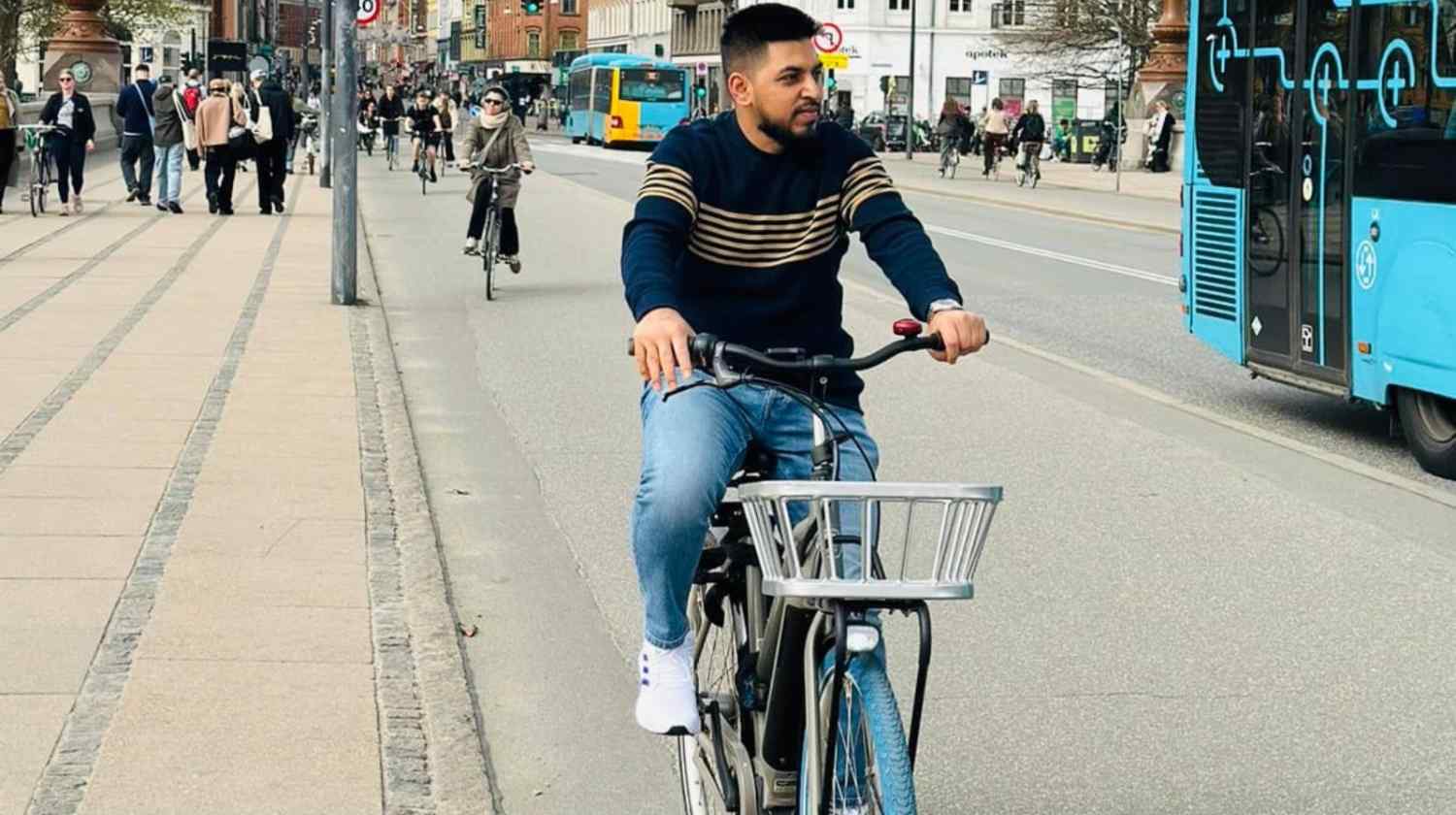
Cycling Rules: Ride Like a Local: Before you set off, follow these simple rules to stay safe and keep the locals happy.
- Always stay on your right-hand side. Keep right, overtake on the left. Look over your shoulder before passing.
- Please avoid ringing the bell unless necessary. In Copenhagen, ringing the bell is considered aggressive. Only use it to avoid an immediate collision.
- Signal your turns. Extend your left arm out when turning left or changing lanes.
- Never stop in the bike lane. Pull onto the sidewalk if you need to check your map or take a photo.
The Beginning: From the Cruise Terminal
If you’re lucky, your ship will dock at Langelinie, which is closer to the city center than the Nordhavn (Oceankaj) terminal. This means you can start exploring Copenhagen almost immediately after stepping ashore.
If you prefer to explore the city by bike, you have several convenient options. You can rent an e-bike from E-Bike Tours Copenhagen, or use shared bikes from Lime and Donkey Republic, which are widely available throughout the Langelinie area. These options make it easy to follow the route and cover more ground within a short time.
One of the first highlights on this route, Genetically Modified Paradise, is located just a three-minute walking distance from the cruise terminal, making it an easy and stress-free first stop. It’s a great introduction to Copenhagen’s waterfront setting and modern public art.
Genetically Modified Paradise (1 minute by bike)
One of the first highlights on this route, Genetically Modified Paradise, is located just one minute bike distance from the cruise terminal, making it an easy and stress-free first stop. It’s a great introduction to Copenhagen’s waterfront setting and modern public art. The artwork was designed by the Danish artist Bjørn Nørgaard for the World Expo 2000 in Hannover, Germany , and reflects ideas about science, technology, and human influence on nature.
The Polar Bear (Isbjørn med unger)
If you continue walking further toward the city along the harbour, you will soon come across the Polar Bear statue, standing prominently at Langelinie Harbour. The distance from Genetically Modified Paradise to the Polar Bear statue is very short and follows the waterfront path. It takes approximately 5 minutes on foot or 1–2 minutes by bike.
The Little Mermaid
From the Polar Bear statue, simply follow the harbour path south. In under two minutes, the silhouette of the Little Mermaid comes into view, sitting quietly on the rocks by the water. The Little Mermaid is Copenhagen’s most famous statue and one of the city’s most visited attractions. Inspired by the fairy tale by Hans Christian Andersen, the statue was unveiled in 1913 and has since become a symbol of Denmark’s storytelling tradition and Copenhagen’s close connection to the sea.
Kastellet
The Kastellet is a well-preserved star-shaped fortress from the 17th century and one of the most distinctive historical sites in Copenhagen. From the Little Mermaid, it takes no more than two minutes to reach Kastellet, making it a quick and natural continuation of the route.
Gefion Fountain
If you cycle for about 2 minutes from Kastellet, you will reach the impressive Gefion Fountain, one of Copenhagen’s largest and most dramatic fountains. It depicts the Nordic goddess Gefion driving four powerful oxen, illustrating the legendary story of how the island of Zealand was created. Donated by Carl Jacobsen of Carlsberg and unveiled in 1908, the fountain is a striking blend of mythology, art, and Danish history, beautifully located near Kastellet and the harbor.
Royal Pavilions
After that, if you continue biking toward the harbor, in about one minute you’ll reach the Royal Pavilions at Nordre Toldbod. The Royal Pavilions at Nordre Toldbod are two small historic buildings created in 1905 to serve as waiting and reception shelters for the Danish Royal Family when arriving or departing by sea. They are closely connected to royal maritime traditions and ceremonies involving the Royal Yacht Dannebrog.
Amalienborg Palace.
From the Royal Pavilions, it takes about 3 minutes by bike to reach the residence of the King, Amalienborg Palace. Amalienborg is the home of the Danish royal family and one of Copenhagen’s most important landmarks. The palace complex was created by King Frederik V as part of the grand city project Frederiksstaden, together with the nearby Marble Church. Four elegant palaces surround an octagonal square, with an impressive statue of King Frederik V at its center. The statue sits on a straight visual axis with the Marble Church on one side and the Opera House across the harbor on the other, placing all three landmarks in a single line.
Nyhavn
From Amalienborg Palace, it takes about 2 to 3 minutes by bike to reach the famous Nyhavn, the most visited and well-known place in Denmark and a true must-see for any visitor. Nyhavn is Copenhagen’s most iconic canal, created in the 17th century to allow trading ships to sail directly into the city center. Lined with colorful historic houses and old wooden ships, it was once a busy commercial harbor and later a lively sailors’ district. Today, Nyhavn is one of the most photographed places in the country and a lasting symbol of Copenhagen’s maritime history and cultural life.

Broens Street Food.
From Nyhavn, it takes about 1 minute by bike to reach Broens Street Food, just across the bridge. Now it’s time to relax and try some Danish cuisine. While Nyhavn is fantastic to see, I usually recommend not eating there. Nyhavn isn’t a classic tourist trap, but prices are often slightly higher than elsewhere. Instead, simply cross the bridge and you’ll reach Broens Street Food. Opened in 2018, this seasonal street food market is located at Grønlandske Handelsplads, right next to Inderhavnsbroen between Nyhavn and Christianshavn. Here, you’ll find authentic Danish-inspired food alongside international options, all at more regular prices, with great waterfront views and a lively local atmosphere, making it a favorite stop for both locals and visitors.
Freetown Christiania
Now it’s time to see Freetown Christiania, often called the hippie town. After a 3–4 minute bike ride, you’ll reach this completely different side of Copenhagen. Founded in 1971 on former military land after the Danish army left the area, Christiania is a culturally diverse city within the city. Known for its colorful houses, creative lifestyle, and strong sense of community, it has developed its own identity and symbols, including the red flag with three yellow dots. Christiania feels totally different from the rest of Copenhagen and represents an important chapter of the city’s modern social and cultural history.
Church of Our Saviour (Vor Frelsers Kirke).
After absorbing the unique, free-spirited atmosphere of Christiania, it’s time to see one of Copenhagen's most iconic landmarks. A short bike ride of about two minutes brings you to the magnificent Church of Our Saviour (Vor Frelsers Kirke). This striking Baroque church, completed in the late 17th century, is instantly recognizable by its dramatic spire. The distinctive feature is its external golden spiral staircase, which winds counter-clockwise around the tower to the very top—a daring architectural feat added in 1752. Climbing its 400 steps (with the final 150 being the thrilling outdoor ascent) rewards you with what many consider the best panoramic view in Copenhagen
Circle Bridge (Cirkelbroen).
From the Church of Our Saviour, it takes about 2 minutes by bike to reach the Circle Bridge (Cirkelbroen).It is a piece of contemporary art that has become a beloved part of the city’s harbor life. This unique pedestrian and bicycle bridge was designed by the world-renowned Danish-Icelandic artist Olafur Eliasson and opened in 2015.
Christiansborg Palace
From the Circle Bridge, it takes about 3 minutes by bike to reach Christiansborg Palace. It is one of Copenhagen’s most historic and important landmarks. Located on Slotsholmen, it is at the heart of Danish political life and houses the Parliament, the Supreme Court, and the Prime Minister’s Office, while still being used by the Royal Family for official events.
Tivoli Gardens
From Christiansborg Palace, it takes about 3 minutes by bike to reach Tivoli Gardens.At the edge of City Hall Square, you will find Tivoli Gardens — one of the oldest amusement parks in the world, opened in 1843. More than just a theme park, Tivoli beautifully combines thrilling rides, peaceful gardens, live music, restaurants, and magical evening lights — all in the very heart of Copenhagen. Its historic charm and intimate atmosphere make it different from modern amusement parks.
The Round Tower
From Tivoli Gardens, it takes about 3 minutes by bike to reach the Round Tower. Your next stop is the Round Tower, built in the 17th century by King Christian IV as part of a larger scientific complex, reflecting Denmark’s strong tradition in astronomy and learning. Instead of traditional stairs, the tower features a unique spiral ramp that gently winds its way to the top, making the climb surprisingly easy.
Torvehallerne Food Market
From the Round Tower, it takes about 4 minutes by bike to reach Torvehallerne. It is Copenhagen’s premier food market, opened in 2011 near Nørreport Station. It consists of two glass-walled halls housing more than 60 food stalls. Here, you will find an enticing mix of Danish specialties and international cuisine under one roof. This is the perfect spot for lunch. You can try fresh seafood, traditional smørrebrød (open-faced sandwiches), flaky pastries, artisanal chocolate, or excellent coffee. Street food-style stalls offer quick bites, while smaller shops sell quality ingredients for those who want to take a taste of Denmark home.
Rosenborg Castle
From Torvehallerne, it takes about 2 minutes by bike to reach Rosenborg Castle. Rosenborg Castle is one of Copenhagen’s most beautiful Renaissance landmarks. Built by King Christian IV in the early 17th century, it reached its present form by 1624. The castle is a stunning example of Dutch Renaissance architecture, surrounded by the King’s Garden (Kongens Have), Denmark’s oldest royal park.
Nyboder
Your final stop before returning to the cruise is Nyboder, located about 5 minutes by bike from Rosenborg Castle. Nyboder is a historic district of bright yellow houses built in the 17th century to provide homes for sailors of the Danish Navy. The area was founded by King Christian IV as part of his broader vision to strengthen Denmark’s naval power. It is one of Copenhagen’s oldest residential neighborhoods and still partly used by naval personnel today
Your Final Moments in Copenhagen
As you make your way back to the cruise ship, take a final look at the city around you — the spires, the canals, the cyclists, and the quiet balance between history and modern life. In just a few hours, you have experienced royal castles, scientific landmarks, colorful neighborhoods, vibrant food markets, and living traditions. From the magic of Tivoli to the treasures of Rosenborg, from the spiral walk of the Round Tower to the peaceful yellow houses of Nyboder, Copenhagen has revealed its many layers. This city is not only about famous landmarks. It is about atmosphere. It is about design, sustainability, culture, and everyday life moving at a calm and thoughtful pace. Whether this was your first visit or one of many, Copenhagen always leaves something undiscovered — a reason to return. As your cruise departs, perhaps you will already be thinking about your next visit to this small yet remarkable Scandinavian capital.
Safe travels, and until next time.
Tags :
TravelsShare On :


About Author
Posted by Copenhagen Memories
